
Chesapeake Bench Warrants Explained
“Bench warrant” is the plain-language term for arrest process tied to a missed appearance or court-order violation. In Chesapeake, a missed court date, failure to comply with a summons, or default on a payment plan may lead to additional process, depending on the case and court action. The local sources do not publish one rule that covers every case.
Virginia Code §19.2-128 addresses willful failure to appear and possible forfeiture of security. It is not a complete local issuance rule for every bench warrant. Find the case type and court before choosing a next step.
The court may issue a capias, set a new date, or take another authorized action. No local source gives one timeline from a missed date to warrant entry; ask what the judge actually ordered.
Which Chesapeake Court Holds the Case
Chesapeake's court map matters because a missed GDC date is not a Circuit or JDR case. GDC handles adult misdemeanor, traffic, and city-ordinance matters. Circuit Court keeps felony cases and indictment process. JDR handles juvenile delinquency, juvenile traffic, support, and family matters. Each clerk sees a different set of files.
| Office | Common case type | Contact route |
|---|---|---|
| General District Court | Adult misdemeanor, traffic, ordinance | Clerk or pre/post-court division |
| Circuit Court | Felony, indictment, criminal appeal | Circuit Clerk |
| JDR Court | Juvenile, support, family matters | JDR clerk, subject to access limits |
The official Chesapeake JDR page lists that separate court route.
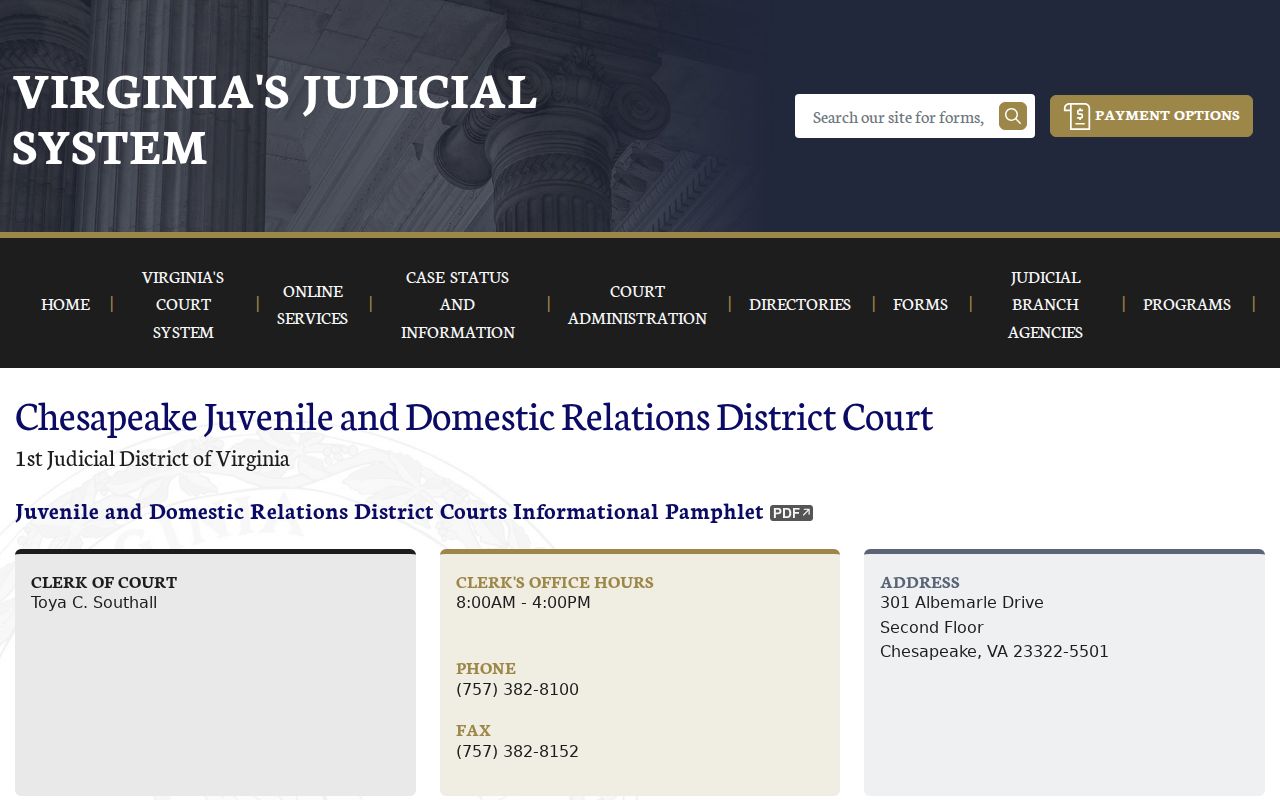
For adult GDC cases, the clerk is at 757-382-3100, with pre-court and post-court lines at 757-382-3119 and 757-382-3134. Circuit Court's criminal clerk is at 757-382-3000; JDR is at 757-382-8100. Have a notice or case number ready, but do not send sensitive juvenile details through a public form.
How Chesapeake Bench Warrants Are Issued
The court's response depends on the original process and case. A judge may issue arrest process after a missed setting or order violation; a summons, traffic matter, indictment, or JDR case can follow different rules. Once process is issued, the court keeps the case record and law enforcement may receive it for service.
Chesapeake has no public bench-warrant list. The Warrant Unit can confirm local process for the caller, while the issuing clerk can explain the case date and filing route. A case result may not show the current warrant flag or recent service return.
Capias and Bench Warrant Are Different Terms
Virginia uses “capias” for arrest process in specific settings. A felony indictment produces a capias under §19.2-232; misdemeanor indictment process may use a capias or summons. Chesapeake's payment page warns that a capias may follow a deferred-payment default. That warning does not mean every unpaid balance creates an automatic warrant.
- Bench warrant
- Plain-language name for process connected to a missed court duty.
- Capias
- Arrest process used after indictment and in other circumstances set by law or court action.
- Failure to appear
- Not meeting a required court appearance or summons obligation.
- Recall or quash
- A court action withdrawing or invalidating process.
Use the issuing court's record rather than treating these labels as synonyms.
Bench Warrants and Arrest Warrants Compared
A bench warrant is tied to an existing court duty; an arrest warrant starts with a probable-cause complaint. Both authorize arrest, but they arise at different points and may be held by different offices. For the initial probable-cause process, see Chesapeake arrest warrant records.
| Feature | Bench Warrant | Arrest Warrant |
|---|---|---|
| Trigger | Missed appearance or court-order issue | Sworn complaint and probable cause |
| Issuing route | Judge in the existing case | Magistrate or authorized judicial officer |
| Case connection | Earlier case or required appearance | Reported offense and supporting facts |
| Next step | Ask the issuing court about appearance or recall | Ask counsel and the issuing court about the process |
JDR Dates and Records Stay Separate
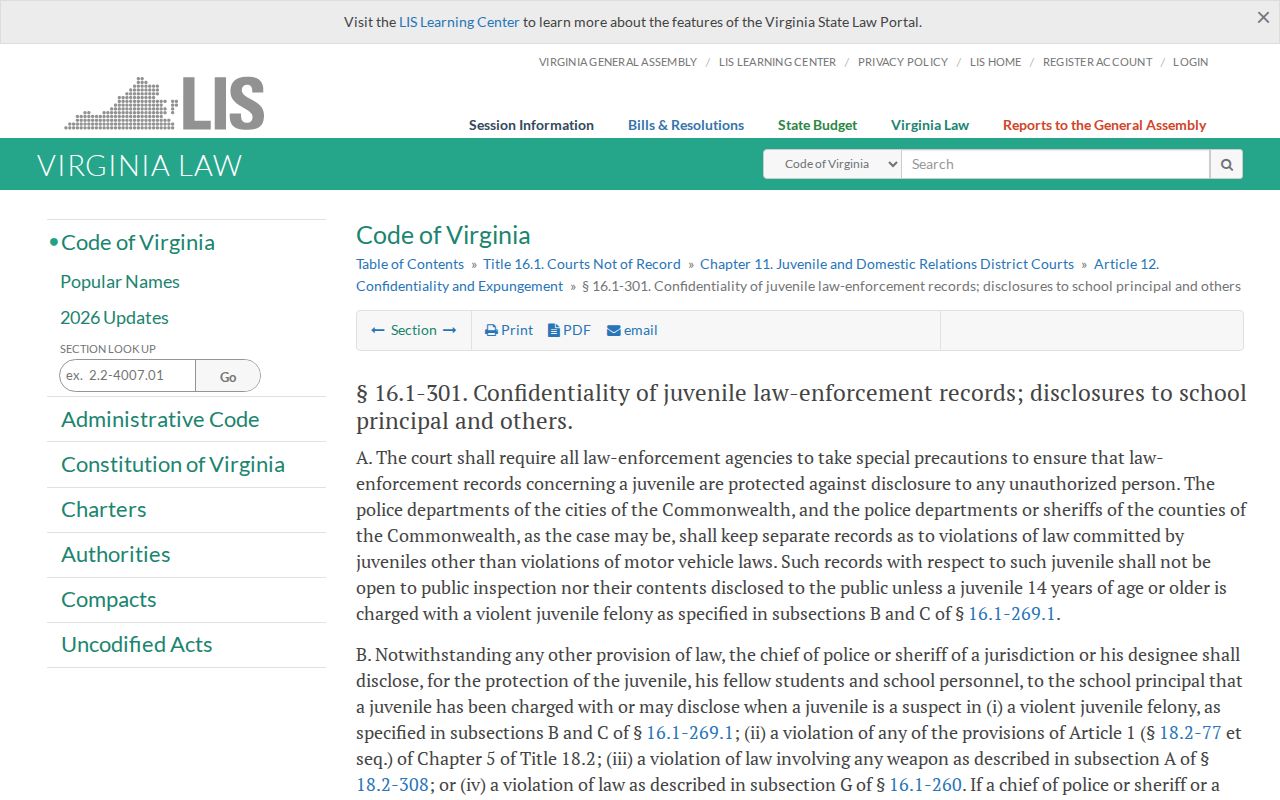
JDR's public schedule separates juvenile delinquency, adult criminal, support, custody, and review matters. A juvenile or family record is not an ordinary public warrant search result. Virginia law places strong limits on juvenile law-enforcement and court records, so a public OCIS result may not answer a JDR question.
The City's JDR schedule and clerk page lists court access information; the image is not a juvenile case listing.

Virginia Code §16.1-301 describes confidentiality for juvenile law-enforcement records.
For a protected matter, call JDR or ask counsel about who may receive the record.
Resolving a Chesapeake Bench Warrant
Confirm the case with the Warrant Unit and then ask the issuing clerk what the judge requires. Chesapeake has no published local recall form, standard reinstatement fee, or walk-through appointment. A lawyer can help with a motion, appearance, or arranged surrender. Paying court costs alone does not prove the warrant has been withdrawn.
- Ask CPD's Warrant Unit to verify your own local process.
- Identify the court with the case and ask its clerk which steps are required.
- Discuss a motion, new appearance date, payment plan, or surrender with counsel.
- After court action, keep the order or receipt and confirm the status again.
Caution: Chesapeake has no published automatic-expiration rule or public walk-in process; confirm the court's instructions before appearing or paying.
Payment Default Can Lead to Capias
Chesapeake's Circuit payment page warns that the court may issue a capias after a deferred-payment default. Its separate plan permits monthly payments on eligible court costs and fines, while GDC has its own local policy. These payment terms do not set a warrant bond and do not automatically recall a bench warrant.
Ask the clerk whether default has led to court action and whether a judge must approve the next step. GDC has separate payment terms, and a receipt does not prove process was recalled.
The City publishes its Circuit deferred-payment instructions for the court-cost plan.
Circuit deferred payments are listed at $25 each month for an account up to $1,000 and $50 per month for each account above $1,000, with 6 percent interest. GDC uses a different agreement and charges $10 when its term exceeds 90 days. These schedules concern court debt; neither amount is a warrant bond or automatic recall fee.
Finding the Court That Issued the Warrant
The court that holds the case controls the calendar and any request to recall or reset process. Chesapeake GDC handles adult traffic, misdemeanor, and ordinance matters; Circuit Court handles felony files; JDR is the route for juvenile, support, and family cases. CPD confirms the law-enforcement side but does not set the court remedy.
Use the court label on a notice or public case result, then call that clerk. If the level remains unclear, start with the Warrant Unit and ask which clerk should handle the matter. The Chesapeake warrant resolution steps include the citywide confirmation order.
A ticket or summons usually identifies its return court, but a transfer or appeal can change the file location. Confirm where the case sits before filing.
After a Missed Chesapeake Court Date
If a date was missed, avoid assuming the case is still open in the same way or that a warrant issued automatically. Traffic infractions and misdemeanor cases can follow different rules, and JDR matters have separate privacy and scheduling limits. Call before visiting: a docket time is not a warrant-surrender appointment.
- Find the court and case number on the summons or notice.
- Call the Warrant Unit to ask about your own local process.
- Call the issuing clerk about a new date, motion, payment, or appearance requirement.
- Ask counsel to help arrange surrender or request relief when needed.
Keep the written notice or court order and verify the status with both the clerk and Warrant Unit after the hearing.
Traffic infractions have a specific statutory limit: Virginia does not authorize a warrant solely for missing court on a traffic infraction. A different charge or court order may still matter, so the clerk must read the actual docket. Do not assume that every missed ticket date or unpaid fine creates the same arrest process.